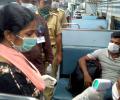
Bad management, an exhausted government vigilance mechanism, delay in roping in private players, relaxing norms, and over-dependence on antigen tests may be the reason behind the surge, reports Shine Jacob.
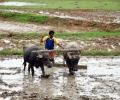
IMD has decided to increasingly use cutting-edge technology such as artificial intelligence (AI) and machine learning (ML) in forecasting, both to avoid such glitches and to counter the disruption of normal seasonal patterns as a result of climate change. It has formed various internal sub-groups of senior officials and meteorologists to decide on how best to use AI and ML in predicting cyclone intensity, and in making short-range weather forecasts (those valid for up to three hours) as well as long-range forecasts.

The government may look at areas around Thonnakkal, in Thiruvananthapuram district, for the facility. If successful, this would be one of the few sites of Sputnik V owned by Russian firms outside that country. Shine Jacob and Sohini Das report.

US tech giant Microsoft is in the final stages of talks with the Telangana government to set up a data centre with a total investment of Rs 15,000 crore. According to sources in the state government, the company has zeroed in on a land parcel near Hyderabad for the facility. "In the information technology (IT) space, Telangana is already seeing some major investments. "Microsoft is establishing its data centre here, and it may come out with a public announcement soon," said a source.

India's largest garment hub Tirupur continues to reel from the effects of the pandemic, with almost 10 per cent of its orders for the upcoming season getting diverted to Bangladesh, Vietnam, Cambodia and China. The sector had seen a drop of about 9 per cent in exports during the first wave, but the impact is likely to be more this time, according to industry experts. Being one of the epicentres of Covid cases in the state, a majority of manufacturing units in the textile belt were closed for almost six weeks during the second wave.

Is there more than meets the eye to Kitex Garments, the world's second-largest children's garment producer, abandoning Kerala for Telangana?
According to latest data, crops have been sown in around 72.13 million hectares, which is 8.90 per cent less than the same period last year.

The death of a 11-year-old boy due to 'bird-flu', even before the devastating effects of the second Covid wave have waned, has alarmed the medical fraternity though they assert that human-to-human transmission of H5N1 virus is extremely rare. The event has also put the Rs 90,000 crore domestic poultry industry which was seeing some uptick in demand after months of low sales last year into a spot of bother, as any curb on sale or production of eggs or chicken could have a devastating impact on its revenues. It is estimated that around 60 million people are directly impacted by the poultry sector in India. H5N1 virus, also commonly known as bird flu, is known to spread from chickens but other birds such as ducks and crow are also carriers of the virus.

Sugarcane dues accruing to farmers rose to almost Rs 21,321 crore as of May 2021. Of that Rs 18,820 crore is for the cane supplied in the current season, which will end in September, while the remaining Rs 2,501 crore is from previous years. Of the pending sugarcane dues of 2020-21, almost 63 per cent accrues to the poll-bound state of Uttar Pradesh. The remaining are from Maharashtra and others.

The government of Tamil Nadu on Tuesday signed a memorandum of understanding (MoUs) with 35 companies that may see investment to the tune of Rs 17,141 crore, creating employment opportunities for 55,054 people. The major companies that would be coming up with fresh investments over Rs 1,000 crore in the state include JSW Renew Energy Two, TCS, ZF Wabco and Srivaru Motors among others. JSW Renew Energy Two will be coming up with a 450 megawatt (Mw) wind power generation unit at Tuticorin, Tirunelveli, Dindigul and Tiruppur for Rs 3,000 crore. TCS will be coming up with its third phase of expansion at SIPCOT IT Park in Siruseri, ZF Wabco with an auto component unit at Kancheepuram for Rs 1,800 crore and a two-wheeler EV unit by Srivaru Motors for Rs 1,000 crore at Coimbatore.

New ministry will bring much-needed transparency in the functioning of the cooperatives, which so far have been riddled with allegations of political interference and mismanagement.

The survey covered 1,210 IT executives and technology professionals from North America, the United Kingdom, Australia, New Zealand, Singapore and India. In India, 202 respondents from businesses with more than 500 employees across 18 industry verticals completed the survey. Overall, 89 per cent of the respondents said implementing a work-from-home policy had increased security challenges for their organisations. The risk posed by shadow IT was especially high, with 89 per cent of companies having no control over the software that employees purchase and install on their devices.

On a day when several mandis across the country are closed in protest against the recent Centre's decision to impose stringent stock-holding limit on pulses, the government clarified that limits have been defined as retail prices are still higher than last year though there is some moderation in the last few weeks. It said the same logic also holds true for edible oils, the import duties on which was slashed few days back and curbs lifted on import of refined oils. The decision on edible oil and pulses have caused massive resentment among the trading community as it came just ahead of the kharif sowing season, when prices were off their peaks due to multiple steps announced previously. Sources said trading activity in some of the major mandis dealing in pulses such as Sholapur, Amravati and Latur in Maharashtra, Indore and Dewas in Madhya Pradesh along with Kanpur in Uttar Pradesh was impacted as traders went on a flash strike in protest against the decision to impose stock limits.

For the second month running, the demand for work under the flagship MGNREGA scheme has been lower than in 2020, which was an extraordinary year for the scheme. Latest data shows that around 35.1 million households have sought work under MGNREGA this June, or 21.48 per cent lower than the number that had sought work in the same month of 2020. This May, some 27.6 million households had sought work under the scheme, or 26.01 per cent lower than the same month last year.

With rainfall and monsoons becoming highly unpredictable partly due to climate change and partly due to usual changes in weather patterns, it is such innovations by IMD which will help in planning better, reports Sanjeeb Mukherjee.

According to the latest report from Stranded Workers Action Network (SWAN), a voluntary effort started in March 2020 to mobilise relief for stranded migrant workers, almost 92 per cent workers, whom the group contacted between April 21 and May 31, had not received any money from their employer. This was after restrictions were imposed and work had stopped. The survey, which was conducted among 1,396 worker groups, adding up to 8,023 people that included 4,836 women and children, showed that 76 per cent of the workers had less than Rs 200 left with them.

As India looks to mend its Covid-battered economy, one thing that will grab the attention of all concerned is the path that both wholesale and retail inflation will follow. Even the Reserve Bank of India in its latest policy statement said, "Going forward, the inflation trajectory is likely to be shaped by uncertainties impinging on the upside and the downside.

The cover provided under the Centre's Pradhan Mantri Suraksha Bima Yojana, which is a vital safety net for them, ended almost a year back on May 31, 2020. Ever since, there hasn't been much progress on the higher insurance coverage of Rs 5 lakh promised under the newly launched Pradhan Mantri Matsya Sampada Yojana, reports Sanjeeb Mukherjee.

As India looks to scale up use of technology in agriculture, a recent study has found that with just 2 per cent of the cultivators in India using mobile applications for farm-related activities and real-time alerts, adoption of tech solutions such as Internet of Things (IoT) remains at a nascent stage. It also found almost 90 per cent of the existing start-ups and tech-based companies have solutions that are focused only on pre-harvest operations and not on post-harvest which has a higher investment potential due to the presence of big companies. In post-harvest operations, the study, Titled, IoT Adoption in Indian agriculture, that was conducted by industry body Nasscom along with Cisco India among more than 180 enterprises and 40 agritech start-ups found that unclear Return on Investments (RoI) is a big stumbling block for adoption of tech solutions like IoT.

Surface temperatures have increased rapidly during the past century, leading to an increase in the frequency and intensity of tropical storms in the Arabian Sea, reports Sanjeeb Mukherjee.
 © 2025 Rediff.com - Investor Information - Advertise with us - Disclaimer - Privacy Policy - Sitemap - Feedback - About us - Terms of use - Grievances